
The HT7750 is a high-efficiency synchronous step-up (Boost) DC/DC converter designed for applications where a stable 5V output is required from a lower input voltage. Part of the HT77xx series, it is widely used in battery-powered devices because of its low start-up voltage and minimal power consumption.
This guide explores the features, variants, and practical implementation of the HT7750 boost converter.
Key Features of the HT7750
-
Low Start-up Voltage: Can begin operating with an input as low as 0.85V, making it ideal for single-cell battery applications.
-
High Efficiency: Typically achieves 85% efficiency, reducing energy waste and heat.
-
Low Quiescent Current: Features very low power consumption during operation, extending battery life.
-
Internal Switch: Includes a built-in power transistor, reducing the need for many external components.
-
Fixed Output: Specifically designed to provide a constant 5.0V output.
Voltage Varieties and the HT77xx Series
While the HT7750 specifically targets a 5V output, it belongs to a larger family of PFM (Pulse Frequency Modulation) converters. Depending on your circuit requirements, you might use different models from the same series:
1. Fixed Voltage Models
-
HT7727: Provides a fixed 2.7V output.
-
HT7730: Provides a fixed 3.0V output.
-
HT7733: Provides a fixed 3.3V output (extremely common for ESP8266 or low-power sensors).
-
HT7737: Provides a fixed 3.7V output.
-
HT7750: The standard 5.0V model for USB-powered devices or 5V logic.
Available Packages
The HT7750 is available in several form factors to suit different PCB designs:
-
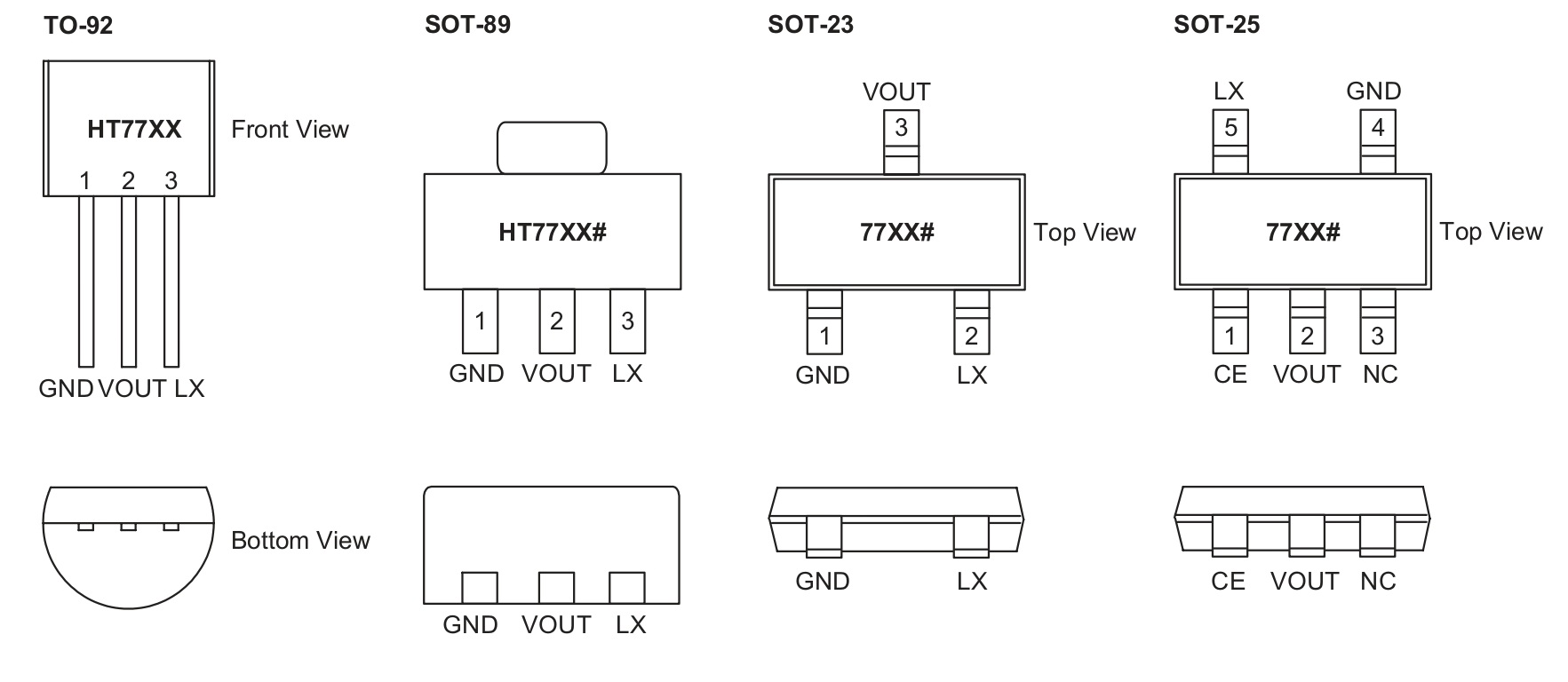
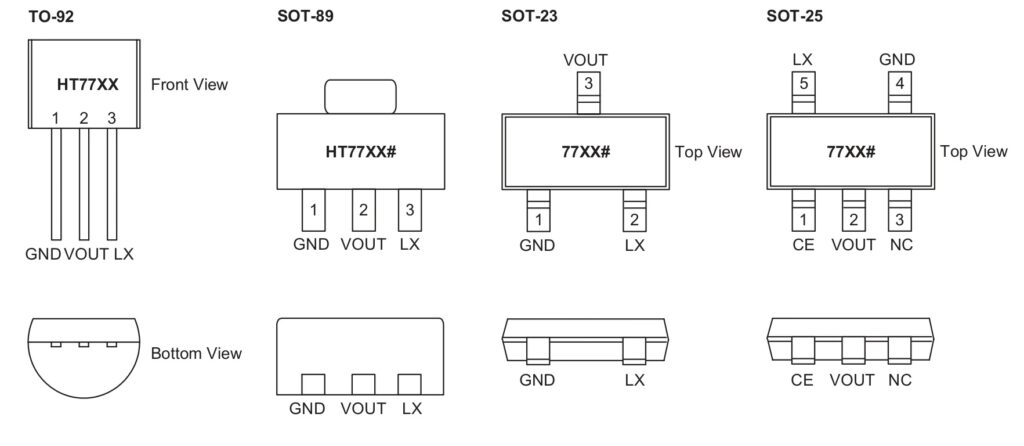
TO-92: The classic 3-pin through-hole package, perfect for breadboarding and DIY hobbyist projects.
-
SOT-89: A small surface-mount package with good thermal performance, often found in compact consumer electronics.
-
SOT-23 / SOT-23-5: Ultra-small surface mount options for high-density circuit boards.
HT77xx TO-92 CAD Model HT77xx SOT-89 CAD Model HT77xx SOT-23 CAD Model HT77xx SOT-25 CAD Model
Technical Specification Overview
| Parameter | Value |
| Input Voltage Range | 0.85V to 6V |
| Fixed Output Voltage | 5.0V (±2.5% accuracy) |
| Output Current | Up to 200mA (depending on Vin) |
| Start-up Voltage | 0.85V Typical |
| Switching Frequency | Up to 100kHz |
| Operating Temperature | -40°C to 85°C |
Pro-Tips for Optimal Performance
-
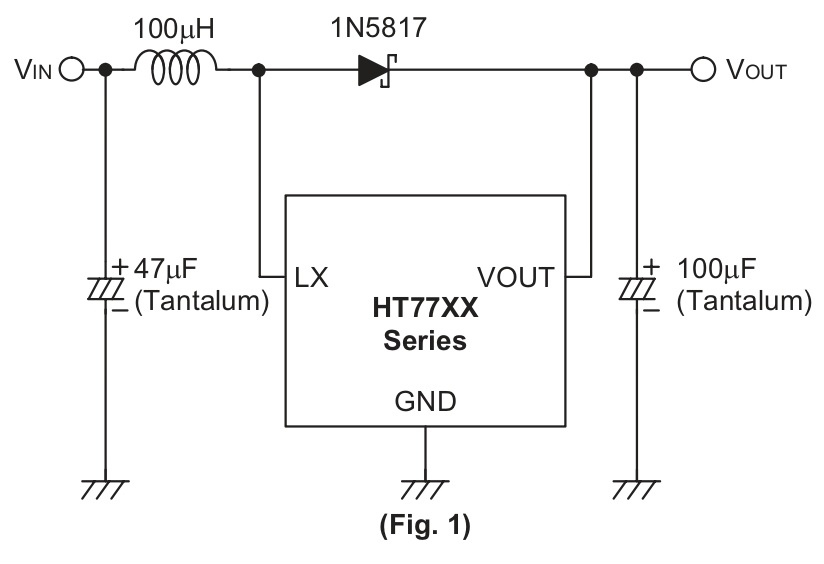
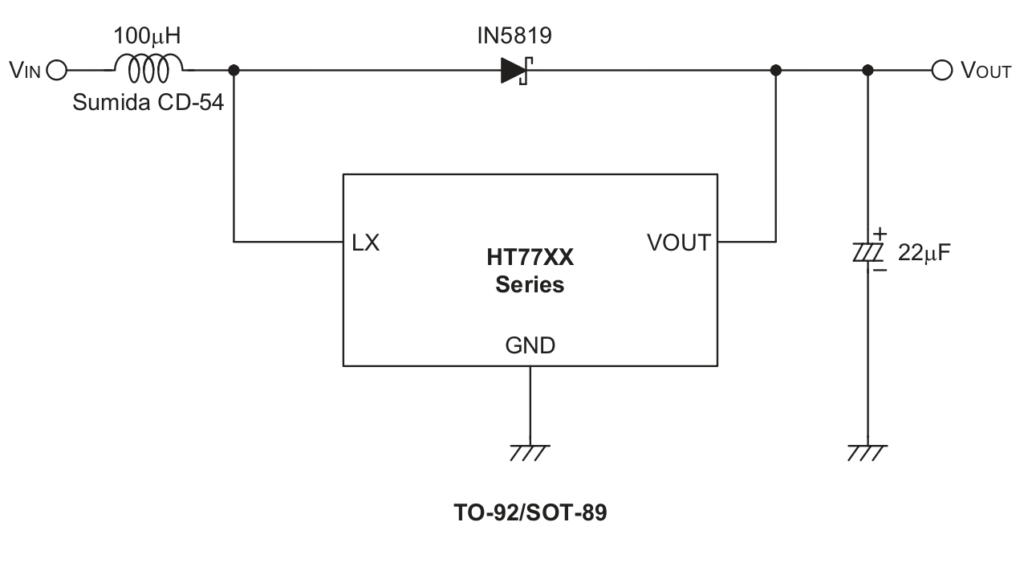
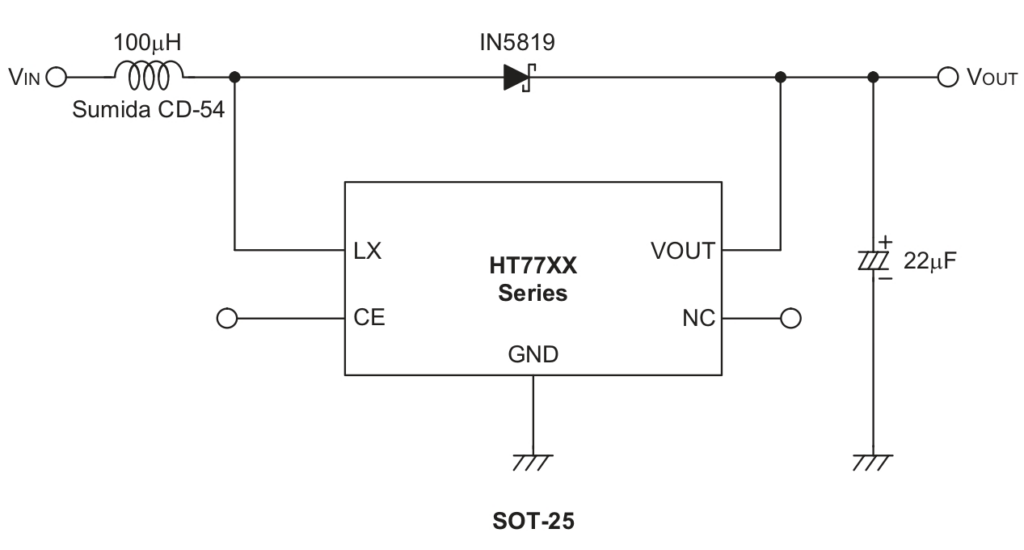
The Inductor Choice: Use a low-resistance inductor (typically 47µH to 100µH). A high-quality inductor prevents power loss and ensures the converter hits its maximum efficiency.
-
Schottky Diode: Since the HT7750 is a non-synchronous boost converter in most 3-pin configurations, an external Schottky diode (like the 1N5817 or 1N5819) is required for the rectification process.
-
Input/Output Capacitors: To reduce switching noise, place a 10µF to 47µF tantalum or electrolytic capacitor as close to the input and output pins as possible.
-
Minimal Traces: Keep the “switching loop” (the path between the IC, inductor, and diode) as short as possible to minimize Electromagnetic Interference (EMI).
Common Alternatives
MCP1640, TLV61220, BL8530, ME2108