The AMS1117 series is one of the most popular low dropout (LDO) voltage regulators used in modern electronics. Known for its reliability and ease of use, it provides a stable power supply for everything from simple LED circuits to complex microcontrollers like the ESP32 or Arduino.
This guide explores the different varieties of the AMS1117, including fixed and adjustable versions across various packages.
Key Features of the AMS1117
-
High Efficiency Output: Delivers up to 1A of output current.
-
Low Dropout Performance: Operates with a typical dropout of only 1.1V to 1.3V at full load.
-
Thermal Protection: Features on-chip thermal limiting to shut down the regulator if it exceeds 165°C.
-
Short Circuit Safety: Built-in current limiting minimizes stress on your circuitry during overload conditions.
Voltage Varieties and Packages
The AMS1117 is available in two main formats: Fixed and Adjustable.
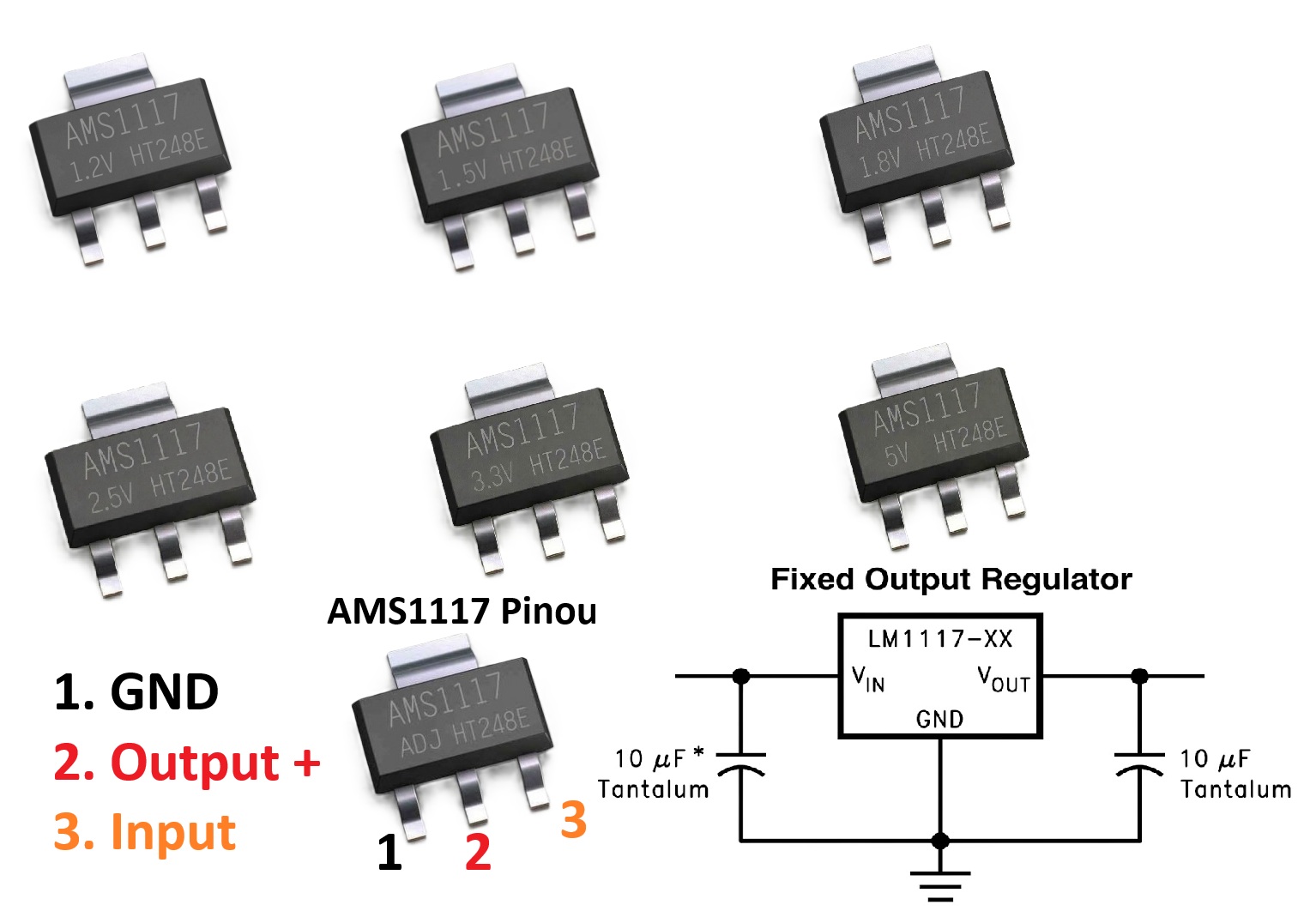
1. Fixed Voltage Models
These are pre-set to specific voltages, requiring no external resistors for operation:
-
AMS1117-1.2V: Perfect for low-voltage core logic.
-
AMS1117-1.5V: Used in specialized digital signaling.
-
AMS1117-1.8V: Standard for many FPGA and ARM processor cores.
-
AMS1117-2.5V: Common for networking and communication ICs.
-
AMS1117-3.3V: The most popular choice for powering 3.3V microcontrollers and WiFi modules.
-
AMS1117-5.0V: Standard for TTL logic and 5V digital systems.
2. The Adjustable Version (AMS1117-ADJ)
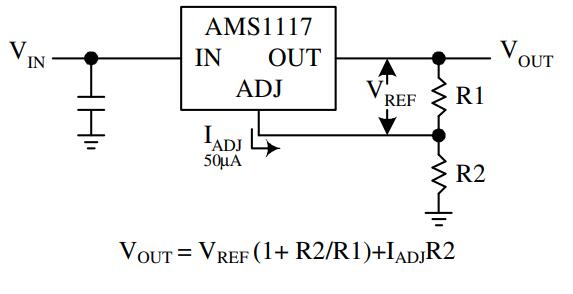
The ADJ version allows you to set a custom output voltage using two external resistors (R1 and R2). It develops a 1.25V reference voltage (Vref) between the output and adjust terminal.
The Full Adjustment Formula:
-
Vref: Reference Voltage (typically 1.25V).
-
R1: Resistor between OUT and ADJ pins (usually 120Ω).
-
R2: Resistor between ADJ pin and Ground.
-
Iadj: Adjustment pin current (typically a negligible 50uA).

3. Available Packages
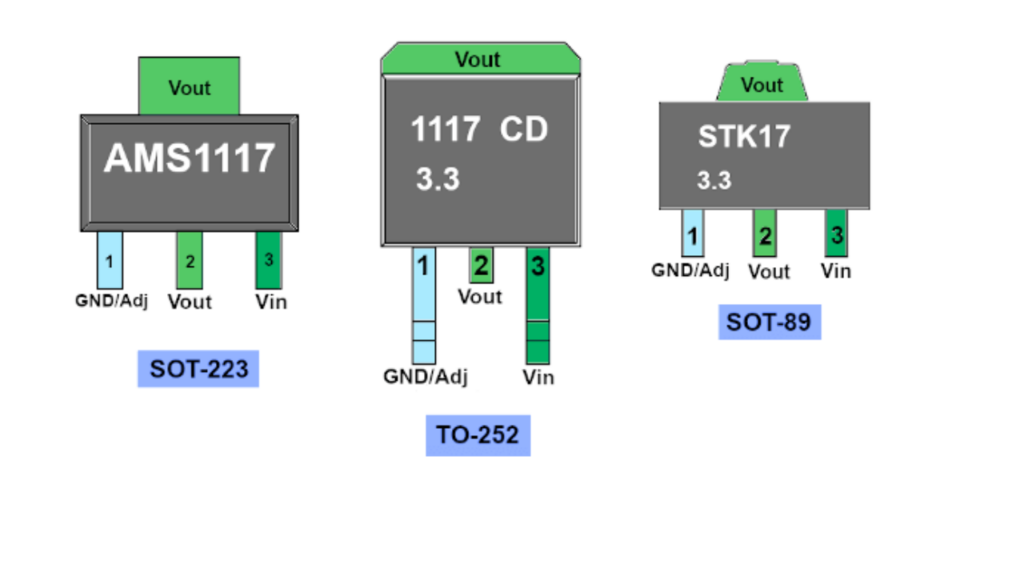
Depending on your space and heat requirements, you can find the AMS1117 in several form factors:
-
SOT-223: The most common 3-lead surface mount package for hobbyist modules.
-
SOT-89: A smaller, low-profile version for compact mobile devices.
-
TO-252 (DPAK): A larger package that offers better heat dissipation for high-power applications.
AMS1117 SOT-223 CAD Model

AMS1117 TO-89 CAD Model AMS1117 SOT-89 CAD Model


Technical Specification Overview
| Parameter | Value |
| Max Input Voltage | 15V (Absolute Maximum) |
| Output Current | 1A |
| Reference Voltage (ADJ) | 1.25V |
| Line Regulation | 0.2% Max |
| Operating Temperature | -40°C to 125°C |
Pro-Tips for Stability
-
Output Capacitors: The AMS1117 requires an output capacitor for stability. A 22μF solid tantalum capacitor is highly recommended to ensure it doesn’t oscillate under load.
-
Heat Management: The tab of the SOT-223 package is electrically connected to the Output pin. Use a large copper area on your PCB to act as a heat sink, as the regulator dissipates heat through the board.
-
Protection Diodes: Generally, protection diodes are not needed unless you are using very large output capacitors (above 1000μF) that could discharge back into the regulator.
Alternatives for AMS1117
LM1117, LM317, LM7805, NTE9060